
Horm Stories #38
Today, I want to take you behind the scenes of Horm’s production department, focusing specifically on wood bending techniques. To successfully shape wood—the cornerstone material of interior design—it is essential to “tame” two of its primary components: cellulose, which provides tensile strength, and lignin, responsible for compressive strength. Both substances must be softened; otherwise, the material would break under stress.
The secret lies in saturating the wood with pressurized steam. During this process, the wood is exposed to heat and moisture, allowing the fibers to expand and become pliable. Once the wood reaches the right temperature, usually around 100°C (212°F), it loses its rigidity and can be gracefully bent along the grain. This is where the magic happens: once dried, the wood returns to its original stability and strength, yet it now holds a new, elegant form.
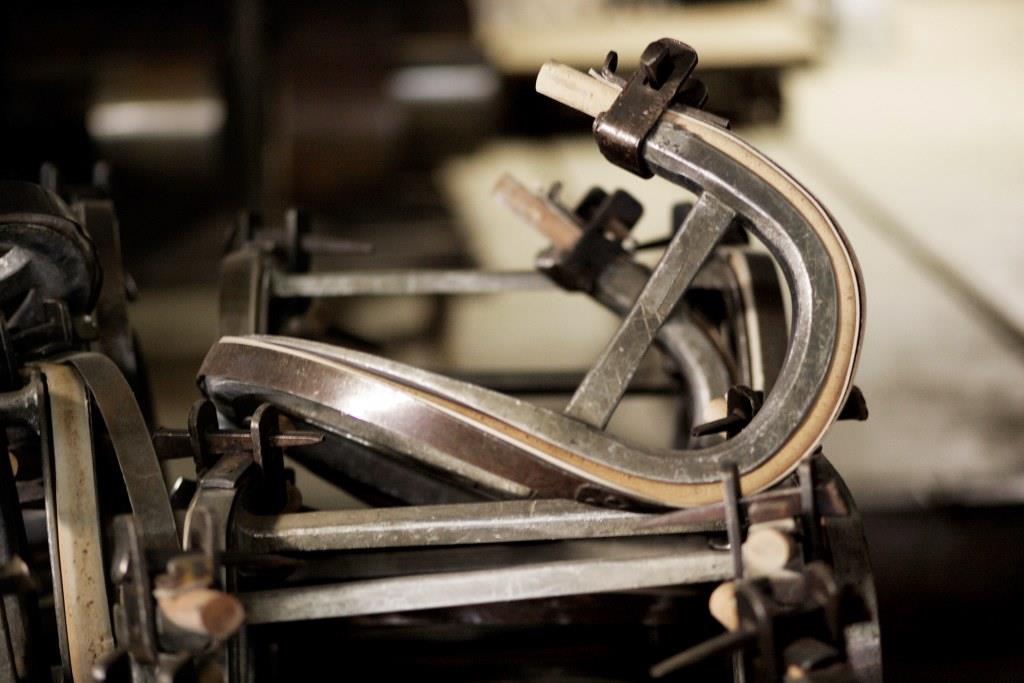
In the 19th century, when Michael Thonet was experimenting with wood-bending techniques, it was no secret that natural wood could be shaped using heat and moisture. However, the bending of solid wood developed by the master craftsman represented a revolutionary breakthrough: for the first time, it became possible to mass-produce chairs, tables, and small-scale furniture. Thonet went on to create a series of iconic pieces, including the famous “No. 14 Chair,” which perfectly combined aesthetics and functionality, becoming a symbol of an entire era.
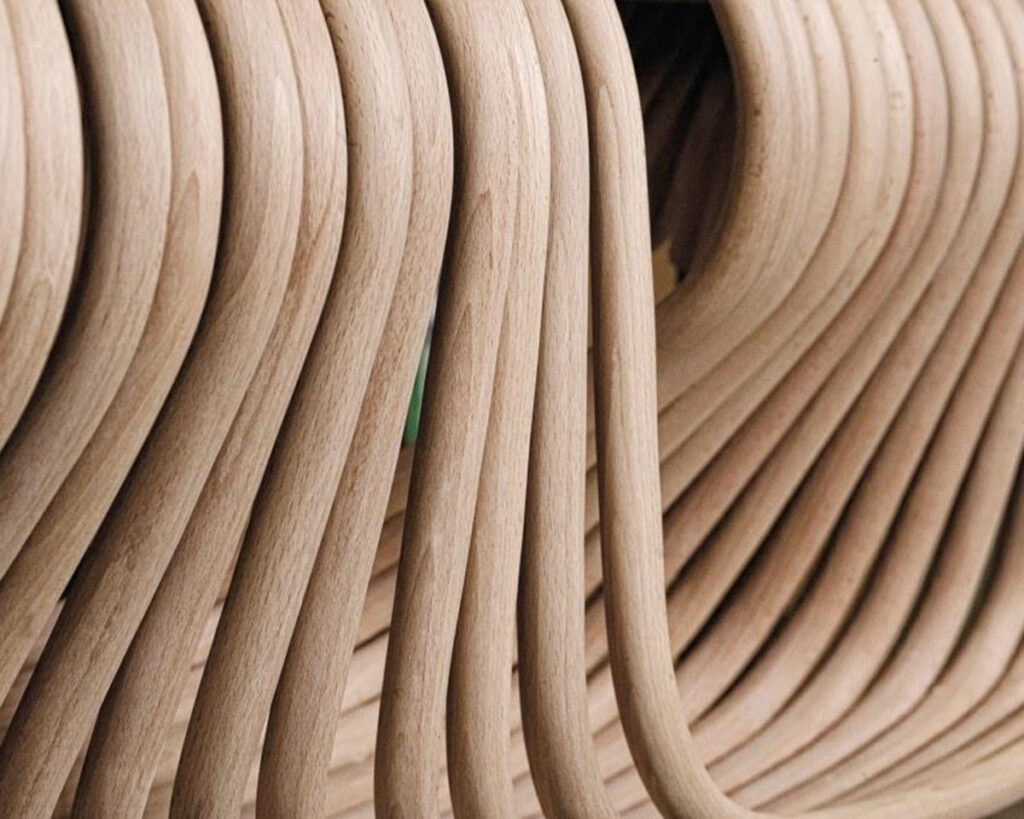
But the true allure of wood bending lies in its versatility. Each wood species, from ash to maple, carries a unique story reflected in its grains and hues. When bent, these natural characteristics are revealed in surprising ways, transforming every piece into a one-of-a-kind work of art. Here, craftsmanship meets material science, producing furniture that is lightweight yet remarkably strong.
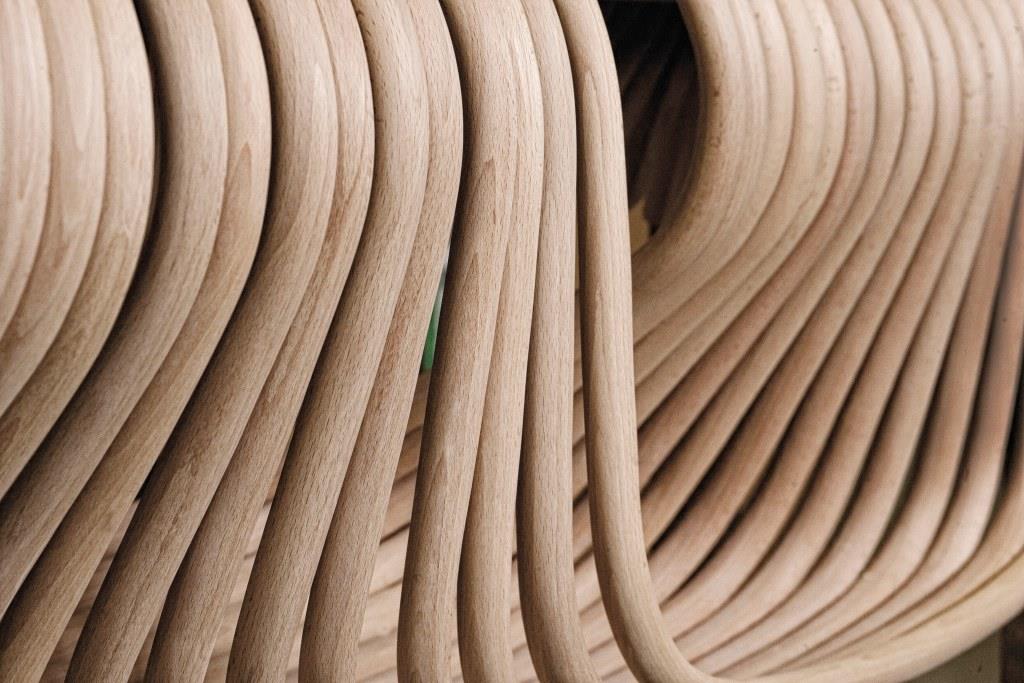
Another advantage of bentwood furniture is that, although crafted from solid wood, it remains lightweight yet stable—a combination of qualities that makes some of Horm and Casamania’s most successful seating designs truly one-of-a-kind pieces.
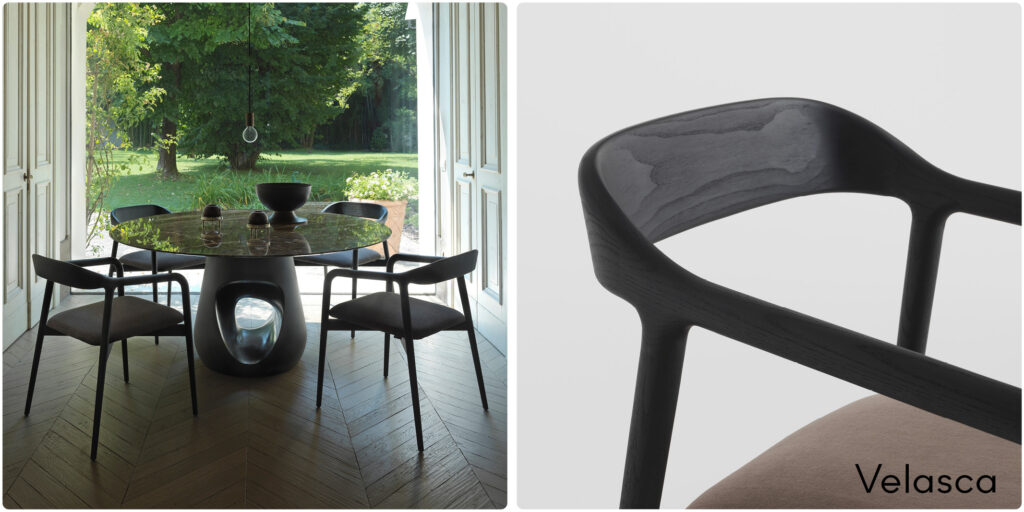
The Velasca chair by Horm, crafted from bent solid ash wood, employs this technique to create a structure that is both robust and elegant. Its fluid, organic form seamlessly combines tradition and innovation, resulting in a piece that is as functional as it is visually striking.
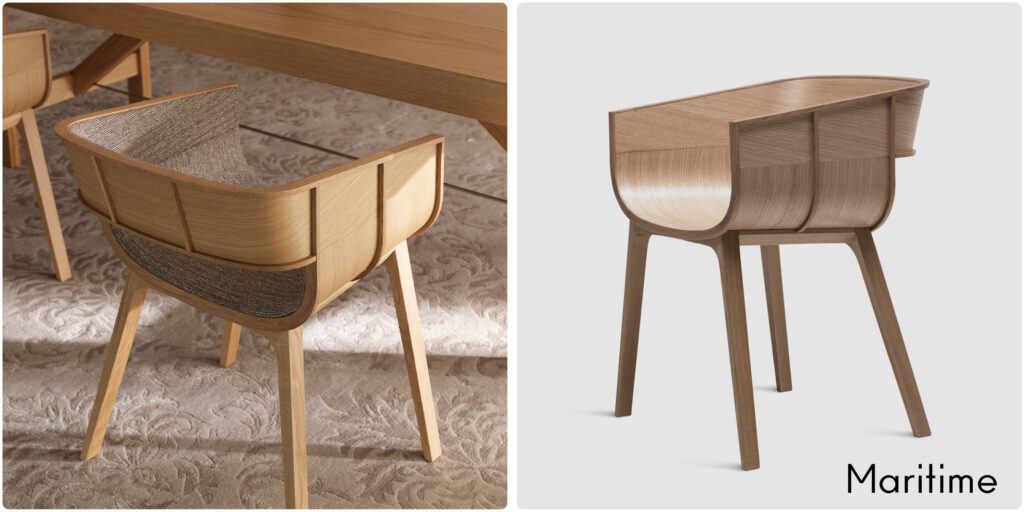
Then there is the Maritime chair by Casamania, which, by embracing the natural grains of bent oak, achieves a welcoming, enveloping form. Its design echoes the graceful curves of ocean waves, evoking a sense of movement and fluidity.
Ultimately, the process of wood bending is not merely a technical endeavor—it is an art that demands passion, patience, and a deep understanding of the material. Every piece tells a story of transformation, craftsmanship, and beauty, bringing into the home not only functionality but also a touch of poetic elegance.