Horm Stories #50
When we talk about marble, the imagination races between ancient columns and modern buildings, between Renaissance sculptures and designer tables. Marble is a living material: it is born from the earth, forms under pressure, matures in the silence of quarries, and then takes shape in human hands. Yet, there is still so much to discover about this stone that has crossed the centuries without ever losing its charm.
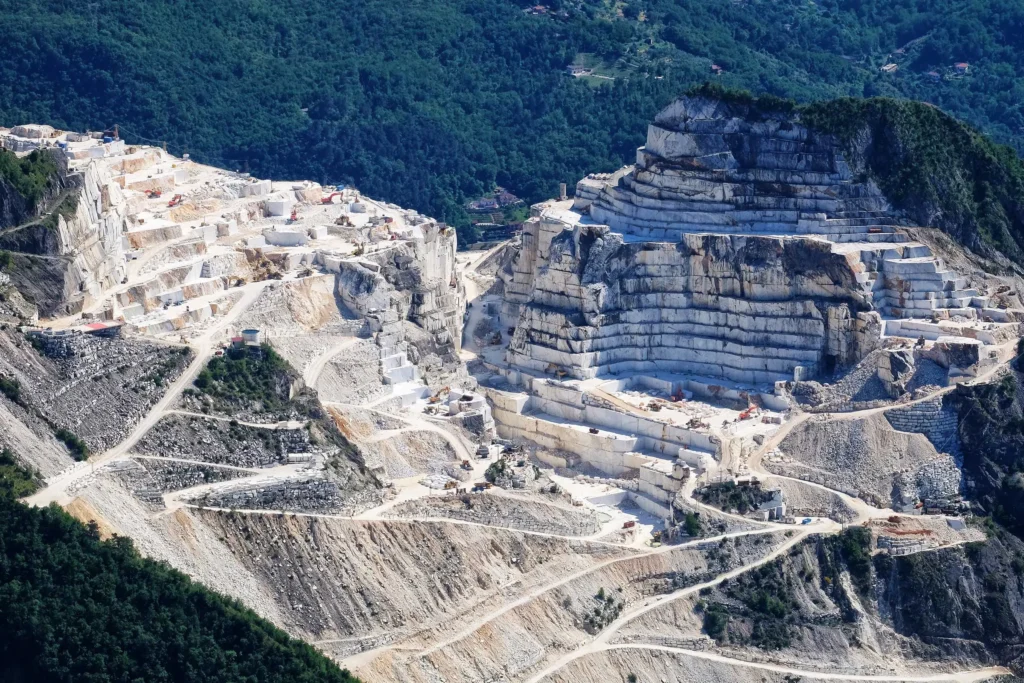
The most famous is Carrara marble, which from the slopes of the Apuan Alps has carved the history of art and architecture. There isn’t just one Carrara marble, but many variations, each with unique shades and veins that make it always different, never banal. It is prized for its uniformity, of course, but also for that delicate translucence that only natural stone can offer.
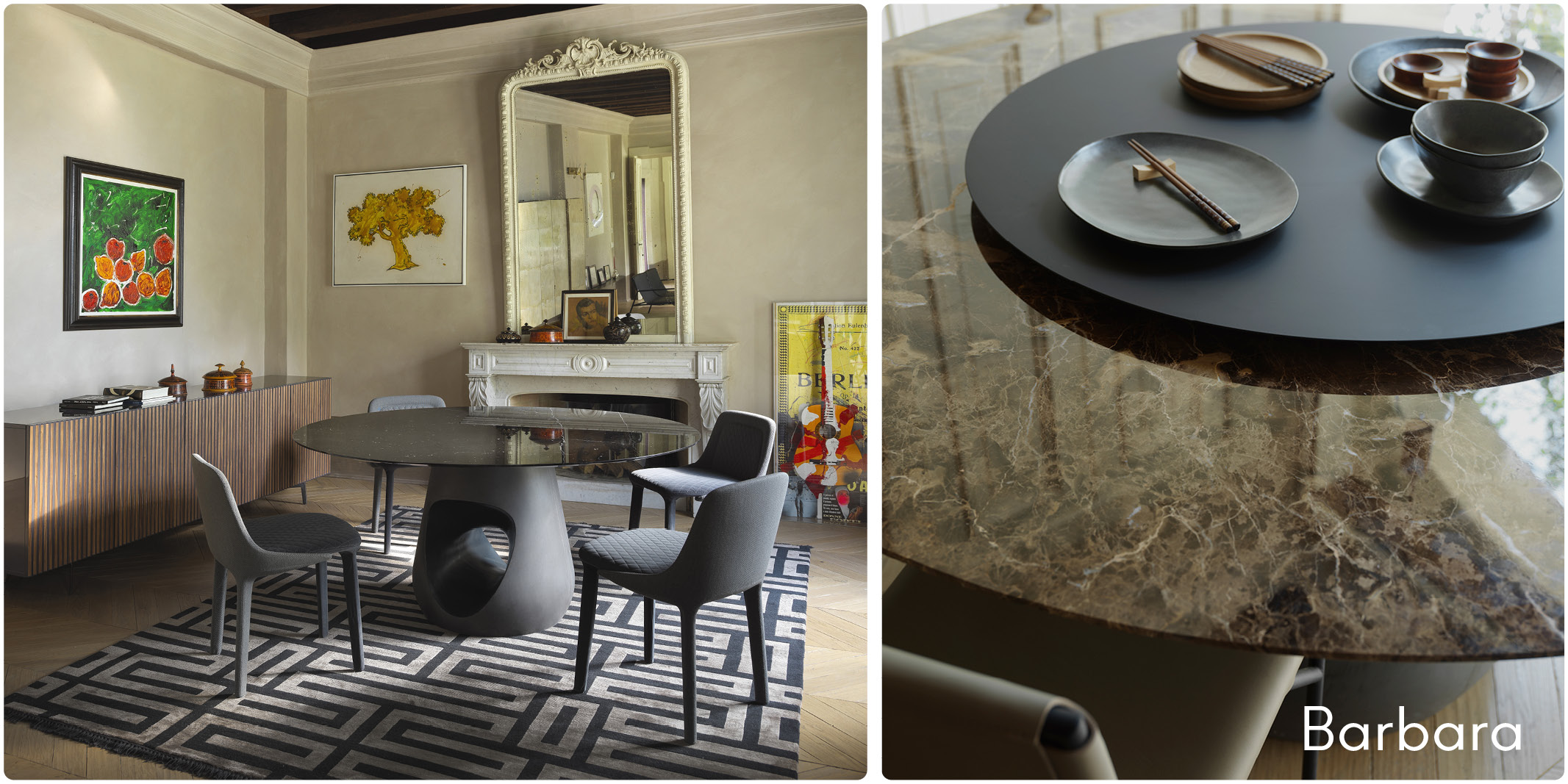
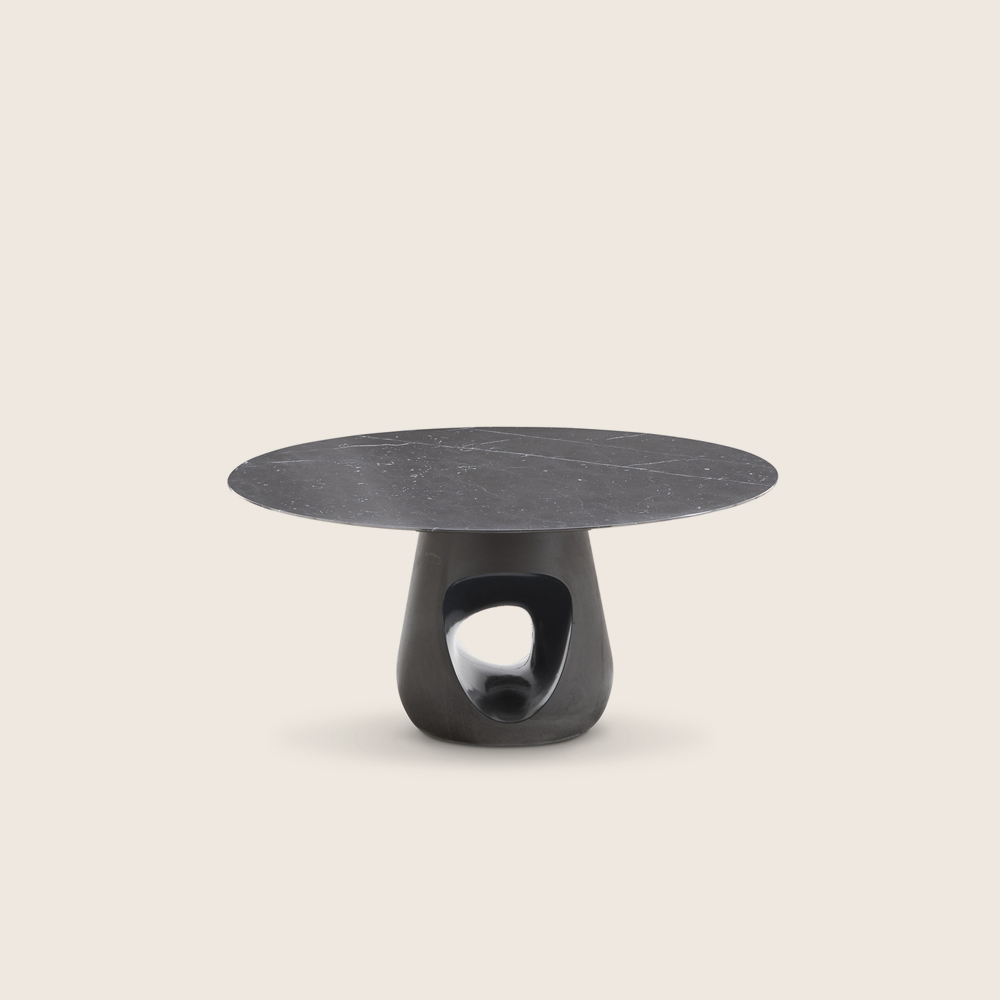
Then there is Nero Marquina, from the Basque Country in Spain. A deep, dark stone, like ink, interrupted by white veins that seem hand-drawn. Interestingly, it is not technically a marble, but a very compact limestone. Precisely because of this origin, it manages to combine elegance and character with extraordinary effectiveness.
Emperador, on the other hand, takes us to warmer territories. The most famous comes from Spain, from the regions of Murcia and Alicante, and is divided into two main variants: Emperador Dark, with a deep brown background punctuated by white, beige, or golden veins; and Emperador Light, lighter, with hazelnut tones and delicate veining. There are also Emperador versions quarried in Turkey, such as Silver or Brown, which differ in tone and veining. These marbles have earthy hues, exude elegance, and can adapt equally well to both classic and contemporary interiors.

What many don’t know is that marble, besides being beautiful, is also delicate. It is porous and sensitive to acids: just a drop of coffee or the wrong cleaning product can leave a mark. It demands care and respect.
Some choose to protect it by applying transparent films that make it more resistant, but these tend to create a “plasticized” effect that flattens its visual depth.
At Horm, we prefer to leave marble as it is: natural, authentic, alive.
To enhance its surface, we use a polishing process with crystallizing powders or light abrasive pastes, which bring out the brilliance without covering the material. The result? An authentic shine that doesn’t betray the essence of the stone, but reveals it.
Because for us, marble is like a work of art: it shouldn’t be protected with a film, but cared for daily, with the attentive eye of those who live with it.
Today, many manufacturers offer ceramics that imitate marble. They replicate the color, the veining, even the texture. But they can never reproduce the depth, the three-dimensionality, and the history embedded in a genuine natural slab.
At Horm, we choose the truth of the material, not its imitation. Because those who choose Horm are attentive, curious, and demanding clients—and they deserve real materials, not industrial replicas.
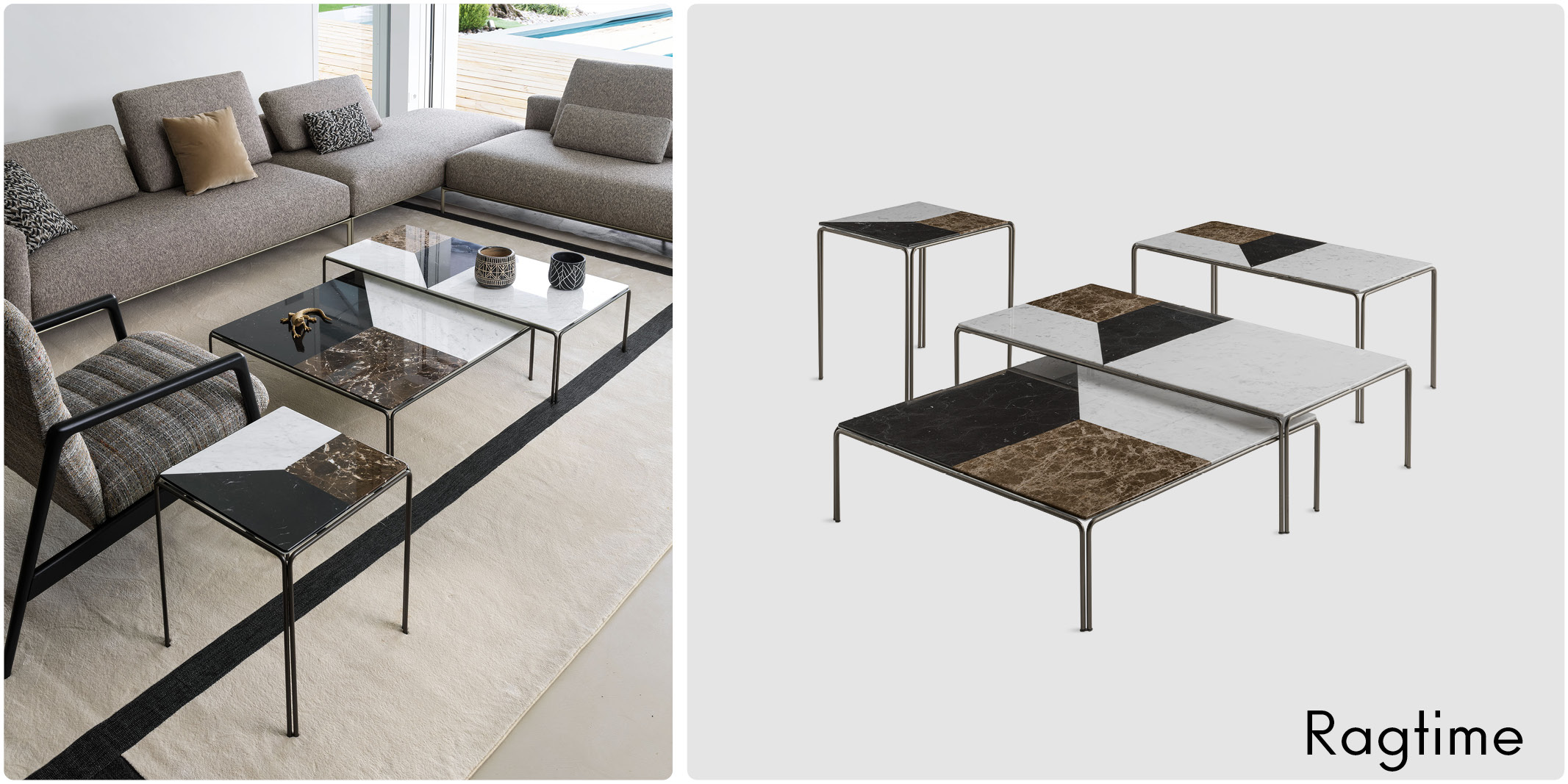
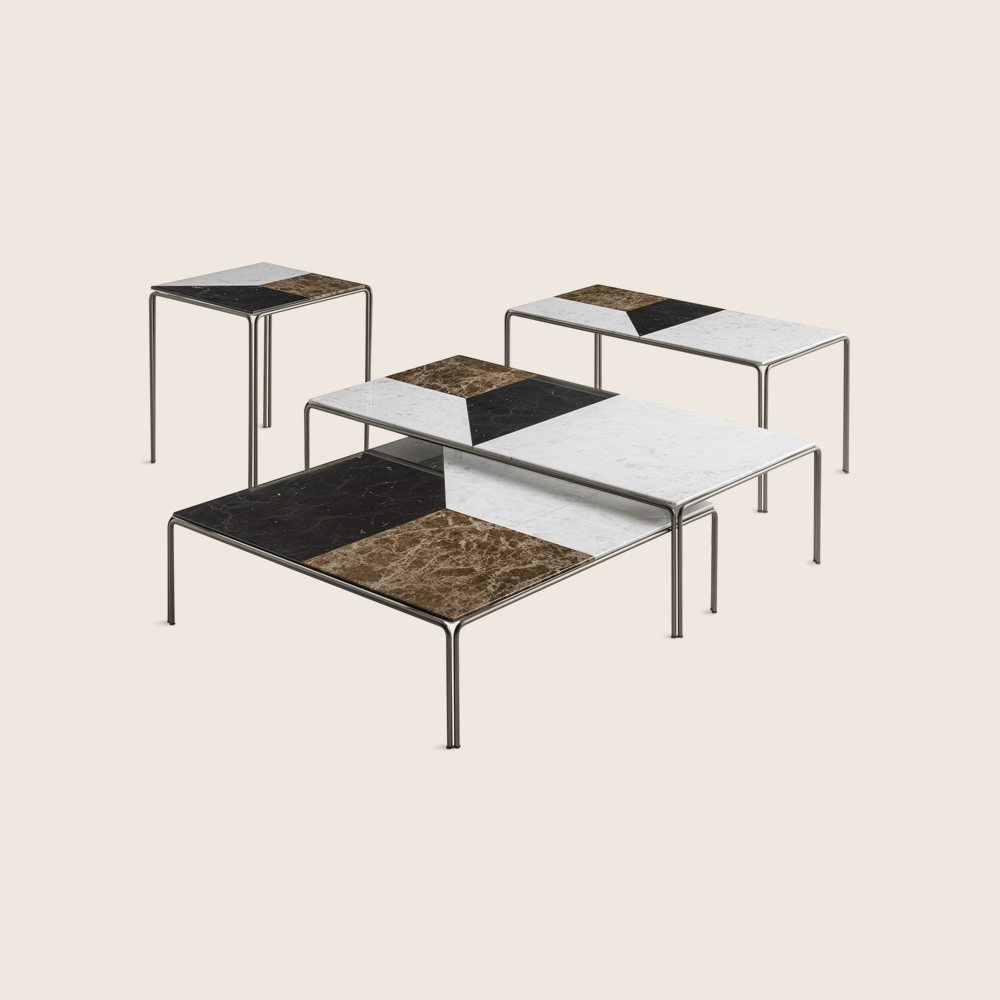
And it is precisely the expressive diversity of these materials that has inspired us.
At Horm, we have chosen them for some of our most iconic collections: from the Barbara table, which combines the rigor of form with the richness of the material, to the Ragtime coffee tables, where stone interacts with wood and metal to tell new stories.
After all, marble is not just a material. It is solid storytelling.
Each slab carries the memory of a landscape, the hand of a craftsman, the eye of a designer.
No two are alike—and perhaps that is exactly what makes it so captivating.
Carrara, Marquina, Emperador: three places, three identities, one common thread.
The pursuit of excellence.
And it is from here that every one of our stories begins.